
How do you transform a painting into a place?
For the immersive exhibition Tarsila do Brasil, I had the opportunity to collaborate with the Ark-X team and Studio Popol on the conception and visual development of two immersive rooms inspired by the work and life of Brazilian modernist artist Tarsila do Amaral.
The collaboration began with an invitation from artist and designer Nathalia Okimoto, who knew I had been wanting to explore illustration and sculpture through VR.
Our first experiment was entirely analogue.
We built a physical maquette using modeling clay, recreating the artworks and sculptures at their intended scale and testing how visitors would move through the space. From there, we moved into VR, recreating the sculptures in Medium and developing the spatial elements that would later be translated into the physical exhibition.
The original room evolved throughout the production process. When the project was revisited the following year, I was invited by Rodrigo Jurado, from Ark-X, and Nathalia to collaborate on two new rooms.

Religião Brasileira
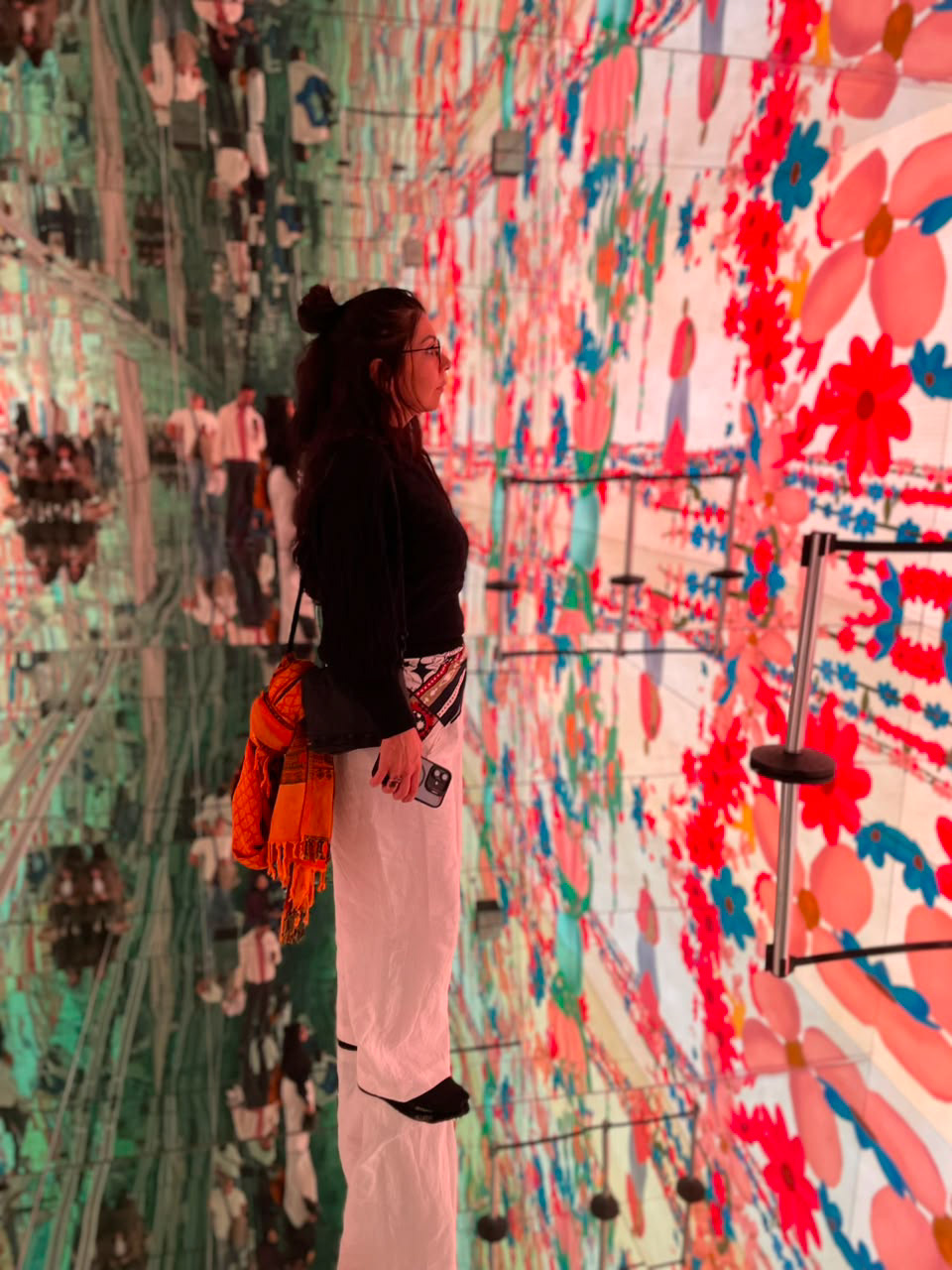
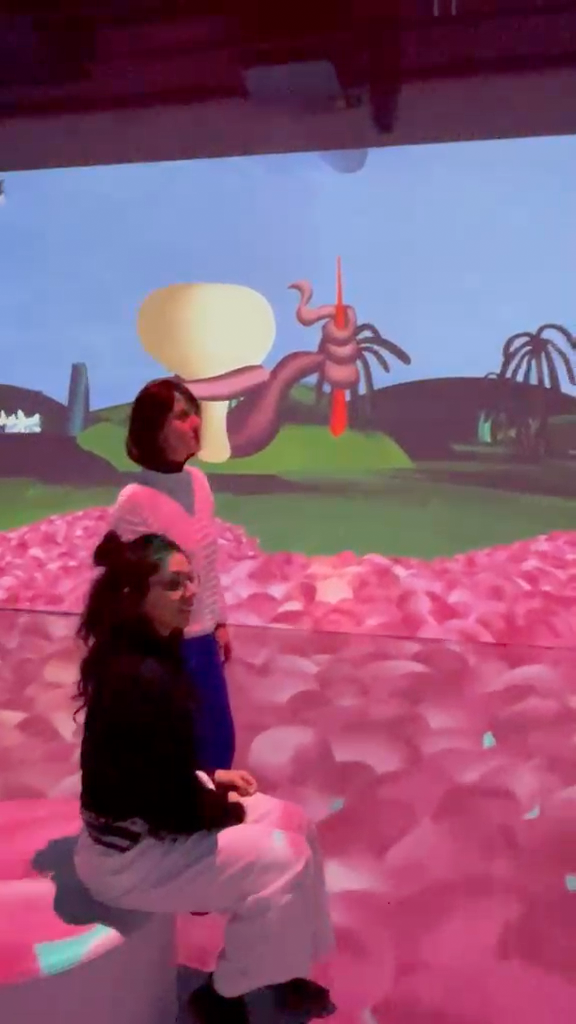
The first room explores two works from different moments of Tarsila's career: Religião Brasileira, painted in 1927, and a later work from 1964.
Rather than simply reproducing the paintings, we imagined the room as a passage into the painting itself.
Visitors are guided by a bird through flowers, relics and mirrored projections, gradually entering the visual universe of the works.
The concept was connected to the original meaning of religion: to reconnect, to bind together again.
The mirrored architecture reinforces this idea, creating an environment where visitors sit together and experience the work as a shared journey.
Tarsila's journey
The final room was the most challenging — and, for me, the most immersive.
Instead of focusing on a single painting, we followed Tarsila's artistic and personal trajectory.
The experience begins with her self-portraits and her life in Europe, before returning to Brazil and moving through landscapes, countryside, train journeys, and the rapid transformation of Brazilian cities.
Night falls. The cities light up. Modern life becomes more vibrant, urban and bohemian.
Then comes Anthropophagy: the idea of consuming what is ours, transforming it, and giving it back as something new.
The visitor moves through this evolution surrounded by Tarsila's imagery, while an original soundtrack by BaianaSystem featuring Tom Zé carries the experience forward.
A collective process
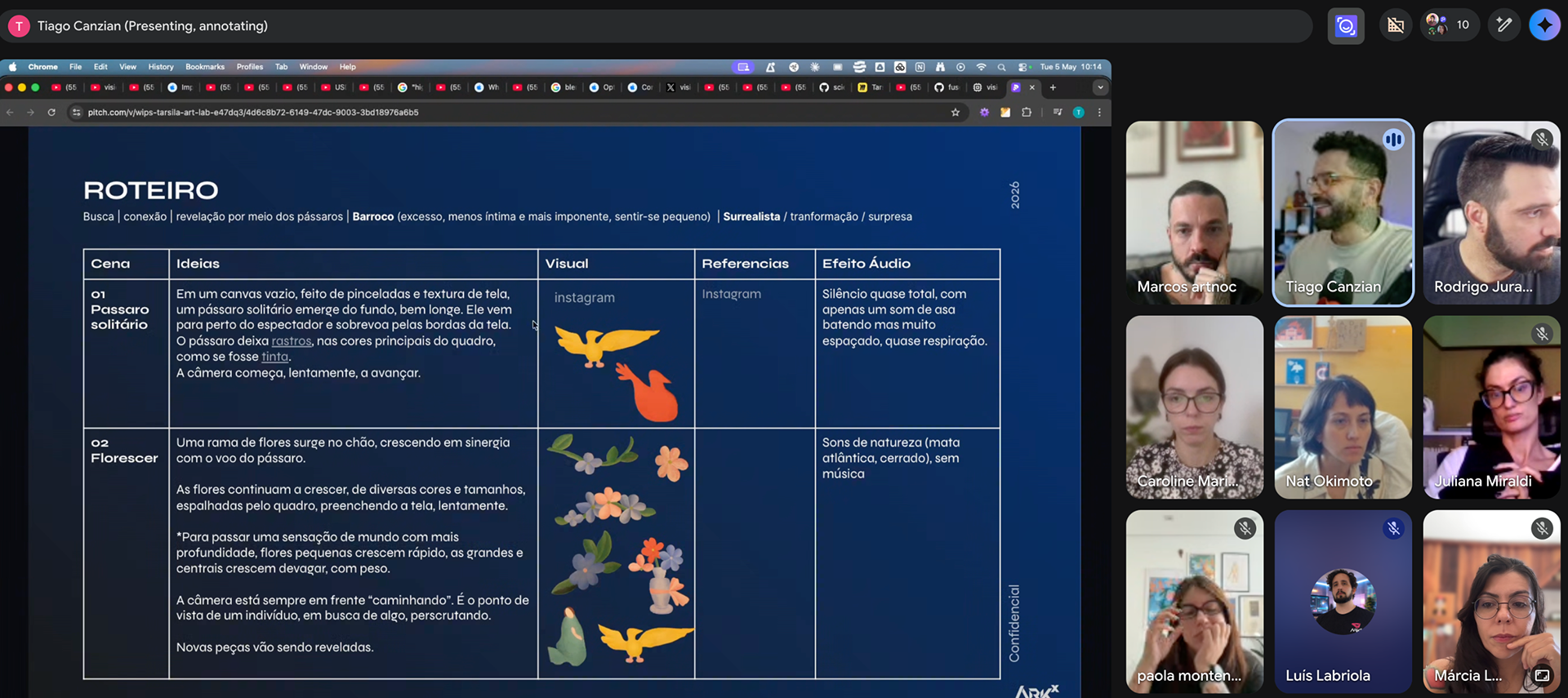
The project was developed through an extensive collaborative process led by Ark-X, involving research, daily exchanges, experimentation and constant dialogue between art, technology, architecture and storytelling.
Working closely with Paola do Amaral Montenegro, Tarsila's great-grandniece and manager of Tarsila do Amaral S.A., and art researcher Juliana Miraldi, brought an essential layer of depth and care to the process.
Their knowledge of Tarsila's work and history helped us approach the artist's universe with curiosity, respect and responsibility.
I was also able to explore new technologies and creative tools alongside Bob, Creative Director at Ark-X, whose technical and creative exchanges became an important part of my learning throughout the project.
The result was much more than an exercise in translating paintings into an immersive environment.
It was an opportunity to think about how we enter an image, how we move through a story, and how technology can create new ways of experiencing art.
A project made through many hands, many perspectives and a lot of experimentation — and one that I am very grateful to have been part of.